The EU needs more medicine – level 2

29-09-2025 07:00
A report says that the European Union has big problems with medicine shortages. Between 2022 and October 2024, 136 important medicines were missing. In 2023, there were 48 shortages, and in 2024, there were 46.
Belgium, Spain, and France had the most serious problems. Many countries also had shortages of antibiotics like amoxicillin. The reasons include high demand, delays in production, not enough capacity, and higher energy prices. Making medicines in the EU is 20–40% more expensive than in Asia, so Europe depends on Asia for most raw materials.
The shortages hurt patients and cost national health systems a lot of money. Countries also report shortages in different ways and have different stock rules, which makes it hard to compare the problem.
Difficult words: shortage (when there is not enough of something what people need), demand (how much people want or need something), capacity (the amount of something can produce or hold).
You can watch the original video in the Level 3 section.
How do high demand, production delays, limited capacity, and higher energy prices—alongside medicine production costs that are 20–40% higher in the EU than in Asia—drive ongoing shortages and Europe’s dependence on Asian raw materials?
LEARN 3000 WORDS with NEWS IN LEVELS
News in Levels is designed to teach you 3000 words in English. Please follow the instructions
below.
How to improve your English with News in Levels:

Test
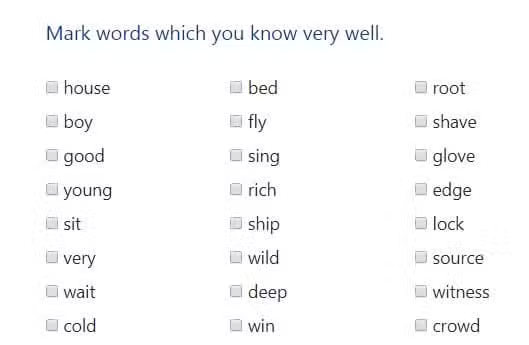
- Do the test at Test Languages.
- Go to your level. Go to Level 1 if you know 1-1000 words. Go to Level 2 if you know 1000-2000 words. Go to Level 3 if you know 2000-3000 words.

Reading
- Read two news articles every day.
- Read the news articles from the day before and check if you remember all new words.

Listening
- Listen to the news from today and read the text at the same time.
- Listen to the news from today without reading the text.

Writing
- Answer the question under today’s news and write the answer in the comments.

Speaking
- Choose one person from our Conversation section.
- Talk with this person. You can answer questions from Speak in Levels.
Stock images by Depositphotos